In the production and filming of a film, be it home-made or a large budget hit, safety is of the upmost concern. Therefore, it is crucial that a risk assessment is drawn up and filled out before any filming can take place. This is my groups set of precautions and possible risks for our media project.
One of the main themes of our film is suspence. Therefore, we will be doing most of the filming in a forest or similar woodland environment. One of the main problems with filming in such an environment is that there are random hazards, such as fallen trees and tangled branches, among other things. As theses obsticles can be tripped over and at the possibility of breaking equipment or injuring actors/crew, they must be treated with prejudice. As such, we must be careful of where we look and set up for filming.
Another place where we will be filming is indoors on staircases for the first initial shots, where the doodler is sitting and ignoring passers by. This can be seen as hazardous as stairs are, of course, usually used quite frequently by other people. This means that due to the presence of filming equipment in this area, there is the potential for not only the damage of equipment, but also possible injury to unaware people. In order to bypass these possibilities, we will have to film these segments during a time perios where there will be little to no flow of people, meaning that this will have to occur during lesson time.

Showing posts with label D. Appendix 1: research for main product. Show all posts
Showing posts with label D. Appendix 1: research for main product. Show all posts
Thursday, 10 March 2011

Wednesday, 9 March 2011
Differences between teaser trailer and theatrical trailer
In the initial process of advertising, it is important for the developer to build up as much hype as possible. Indeed, to "tease" the viewer about the film, leaving them wanting more. As a result, a teaser trailer is very commonplace to carry out the aforementioned tasks. Later on in the development stages of the film, a more in-depth trailer will be released. This is referred to as the theatrical trailer. There are similarities, such as the requirement to build up hype, but also important differences, such as length and other additional purposes. I will be going more in-depth into these differences to further emphasise these variations.
The most obvious difference between these two forms of trailer is their duration. Usually, a teaser trailer lasts for about a minute to a minute and a half. This is largely due to the fact that at this point, the film is in the planning stages, prior to production. This means that they have insufficiant highlights to show at this stage, and as such they must work with what little footage they have at such a time. I also feel that another reson for this is that if they release too much of the footage too early on, the fans will lose interest in the film, as they may become aware of the film's plot before it is even released. By contrast, a theatrical trailer is generally a minute longer, at two and a half minutes. This is partly due to the fact that the film is in its final days of editing, and thus they have vastly greater material to work with. However, there is also the fact that they can tease the audience with a much greater amount of footage than they could show prior to this point. The release date will now be imminant, and therefore they can risk letting more of the film loose.
The duration of each shot can also be seen as differing from both trailers. Generally speaking, when the teaser trailer is distributed, the shots are for the most part, very rapid and in quick succession. A good example of this is the teaser trailer for the remake of "Friday the 13th", as while initially there are a montage of slow shots, they are quickly replaced with the faster paced shots for the remainder. There is one exception to this rule, seen at the end, where Jason runs up to a girl and, apparantly decapitates her. I feel that the reasoning behind this is so that the audience cannot fully make out what is happening, thus leaving them in a state of intrigue and bewilderment. This also leads them to the assumption that if they want to understamd the synopsis, they will have to watch the film. On the other side of things, the theatrical release follows a chronological sequence, as it initially with slower shots, showing a care-free group of teenagers going places they shouldn't go. Then they see, as well as the viewers, a sinister figure of questional humanity, and they decide to investigate. This leads to them all meeting an inevitably horrific and gruesome death, synced with quick and sudden cuts. Initially, this sounds similar to the teaser, but the difference is seen in the smaller details. The main variation is that during the length of the trailer, there are several long shots, which help to break up the sudden cuts and build tension in the viewer. This means that it breaks free of the potentially repetitive style of a teaser trailer, which is the main development in the evolution of a teaser to a theatrical trailer.
Fan service, especially for a specific franchise, also plays a significant role in the appeal of a trailer, as the inclusion of a well-established character is pivitol to success. Again, this can be seen in both teaser and theatrical trailers for Friday the 13th. For the teaser trailer,. he is a crucial factor for the fans, as otherwise it would not be Friday the 13th, rather just another cliche horror film. As a result, even though his screen time in the teaser is very minimal, it is enough to show that this is a film in the Friday the 13th franchise. In the theatrical trailer, however, Jason has a lot more screen time, which helps to signify that he is the main focus point of the film, as well as showing that there is less fan service in this trailer, and more of a focus on the story of the film.
The most obvious difference between these two forms of trailer is their duration. Usually, a teaser trailer lasts for about a minute to a minute and a half. This is largely due to the fact that at this point, the film is in the planning stages, prior to production. This means that they have insufficiant highlights to show at this stage, and as such they must work with what little footage they have at such a time. I also feel that another reson for this is that if they release too much of the footage too early on, the fans will lose interest in the film, as they may become aware of the film's plot before it is even released. By contrast, a theatrical trailer is generally a minute longer, at two and a half minutes. This is partly due to the fact that the film is in its final days of editing, and thus they have vastly greater material to work with. However, there is also the fact that they can tease the audience with a much greater amount of footage than they could show prior to this point. The release date will now be imminant, and therefore they can risk letting more of the film loose.
The duration of each shot can also be seen as differing from both trailers. Generally speaking, when the teaser trailer is distributed, the shots are for the most part, very rapid and in quick succession. A good example of this is the teaser trailer for the remake of "Friday the 13th", as while initially there are a montage of slow shots, they are quickly replaced with the faster paced shots for the remainder. There is one exception to this rule, seen at the end, where Jason runs up to a girl and, apparantly decapitates her. I feel that the reasoning behind this is so that the audience cannot fully make out what is happening, thus leaving them in a state of intrigue and bewilderment. This also leads them to the assumption that if they want to understamd the synopsis, they will have to watch the film. On the other side of things, the theatrical release follows a chronological sequence, as it initially with slower shots, showing a care-free group of teenagers going places they shouldn't go. Then they see, as well as the viewers, a sinister figure of questional humanity, and they decide to investigate. This leads to them all meeting an inevitably horrific and gruesome death, synced with quick and sudden cuts. Initially, this sounds similar to the teaser, but the difference is seen in the smaller details. The main variation is that during the length of the trailer, there are several long shots, which help to break up the sudden cuts and build tension in the viewer. This means that it breaks free of the potentially repetitive style of a teaser trailer, which is the main development in the evolution of a teaser to a theatrical trailer.
Fan service, especially for a specific franchise, also plays a significant role in the appeal of a trailer, as the inclusion of a well-established character is pivitol to success. Again, this can be seen in both teaser and theatrical trailers for Friday the 13th. For the teaser trailer,. he is a crucial factor for the fans, as otherwise it would not be Friday the 13th, rather just another cliche horror film. As a result, even though his screen time in the teaser is very minimal, it is enough to show that this is a film in the Friday the 13th franchise. In the theatrical trailer, however, Jason has a lot more screen time, which helps to signify that he is the main focus point of the film, as well as showing that there is less fan service in this trailer, and more of a focus on the story of the film.
Wednesday, 2 February 2011
Monday, 25 October 2010
Various narrative theories and how they relate to horror films
Bulgarian linguist Tzvetan Todarov once said that all stories are told in different ways, but all follow the same routine. The routine being that all stories start with an equilibrium or status quo where any potentially This theory can be clearly seen at work in the horror movie genre, where there are a number of stories at work, all following the same sort of conventions. However, how these conventions are shown through each film differs, if only slightly, by sub-genre.
For example, characterisation is a key part of the horror genre, as it gives the audience, let's say, some backstory into the murderer's reasoning for murdering people. However, some movies go further as to emulate certain traits into the main antagonist. This can mostly be seen in the slasher genre, where film series like Friday the 13th, A Nightmare on Elm Street, the Texas Chainsaw Massacre and Halloween use this form of portrayal.
Take Friday the 13th as an example. The main killer of the series, Jason Voorhees, goes around killing people who are performing inappropriate acts in such a scenario, like sexual intercourse. It has therefore often been said that the character of Jason personifies sexual frustration, because of this unique behaviour and the fact that the only person that he listens to is his dead mother's ghost.
Another good example is the psychopath of the Nightmare on Elm Street series, Freddy Krueger. Based upon the history of the character inside of the franchise and the fact that he preys upon children in their dreams, it has often been said by Robert Englund, the actor who has always portrayed Freddy in all the films bar the remake, that the character of Krueger is based on neglect, especially that experienced by children at a young age with abusive parents, like Krueger himself had at a young age, which eventually spurred him into becoming a child murderer and then a dream stalker.
Another example of a character that could represent neglect is the infamous Michael Myers from the Halloween series, as it is expolained in the 2007 remake by Rob Zombie that Myers had a terrible upbringing, which causes him to become homicidal. However, I believe that this can only be believed with the remake and it's sequel, as these sequels are not really on the same wavelength as the original movies, featuring changes to the plot and characters which are substantial enough to warrant them a seperate franchise entirely.
For example, characterisation is a key part of the horror genre, as it gives the audience, let's say, some backstory into the murderer's reasoning for murdering people. However, some movies go further as to emulate certain traits into the main antagonist. This can mostly be seen in the slasher genre, where film series like Friday the 13th, A Nightmare on Elm Street, the Texas Chainsaw Massacre and Halloween use this form of portrayal.
 |
 |
Another example of a character that could represent neglect is the infamous Michael Myers from the Halloween series, as it is expolained in the 2007 remake by Rob Zombie that Myers had a terrible upbringing, which causes him to become homicidal. However, I believe that this can only be believed with the remake and it's sequel, as these sequels are not really on the same wavelength as the original movies, featuring changes to the plot and characters which are substantial enough to warrant them a seperate franchise entirely.
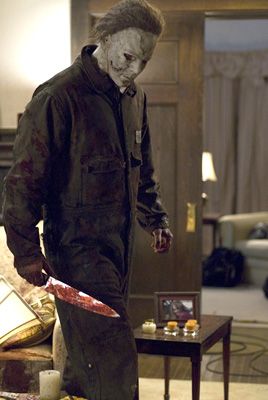 |
So, to talk about the original interpretation of Michael Myers, John Carpenter has often described the character as "almost a supernatural force - a force of nature", "a force of nature. An evil that's loose" and "a force that is unkillable." These comments lead me to speculate that the charcter of Michael Myers is meant to represent evil, which can be seen in the movie right from the beginning when a young Myers kills his older sister and then stalks his long removed sister, Laurie Strode throughout the remainder of the movie to kill her.
It could also be said that Michael represents sexual frustration as well. This can be seen through the fact that most of the people that Michael kills throughout the movies he's been in are women, which could reveal to be some sort of sexual deviance on the characters part. David Farrands, the writer of the sixth Halloween film theorized that Michael became fixated on the death of his sister, and felt the need to replicate the need to kill in Laurie Strode, whos sister-esque figure excited him sexually.
Saturday, 23 October 2010
Textual Analysis of a horror movie trailer I find interesting
I find The Devil's Rejects an interesting horror film, because it forces you to decide yourself who are the real bad guys, the Firefly family who torture and humiliate their victims, or the Sheriff who becomes a psycopath for what the family did to his brother, and then tortures the family when he catches them. this means that the bad guys become victims, and you have to decide who you want to sympathize, rather than it being laid oout for you.
The trailer follows a lot of cliches of a horror trailer, showing a lot of long clips that are interlinked with fades, which help to make the trailer flow without breaking the continuity of it. However, there are also a lot of quick cuts that create suspense and also help to make the trailer feel less slow than it initially feels.
Another cliche of a standard horror movie trailer is that there is little to no voice over throughout the whole of the trailer. This is carried through into the trailer here, as there is absolutely no voice over, just ambient sound at certain points and then diagetic sound from film clips. This can be seen as the easy way out, as a voice over into a horror trailer is a very daring and sometimes dangerous addition, as it can make or break the whole trailer, either making if feel overdone and cheesy, or ruining the whole effect of the trailer and making it feel cheap.
There also seems to be a theme of an appeal for the target audience, in this case the name of the director, Rob Zombie. This is helpful to the film's presence as it will make the film appealing to fans of Rob Zombie's music, as well as his movies. This helps to give the movie a much larger area of appeal than it would do if it didn't mention it was a Rob Zombie film.
Analysis of gender stereotypes in horror movies
In a standard horror movie, there are two generic stereotypes of a female persona. There is either the one end of the extreme, being the extremely slutty, girly girl. This type is the type that usually is killed during the course of the film, almost as if to say if you are a slut, you will not survive. Then, there is the other extreme, being the less feminine, more masculine approach to females. This type is the type who usually survive, possibly out of chance of being more intelligent than the other, sluttier class of girls.

A good example of this is seen in Halloween (1978), wherein Laurie Strode is not as feminine as the other babysitters in the film, who are all very feminine and outgoing. These girls are the ones who eventually get killed off by Michael Myers. Meanwhile, Laurie is more sensible, as she doesn’t go out and have sex with guys, instead opting to babysit for Timmy, the child next door from her. Laurie does survive Michael’s bloody rampage, but only just makes thanks to an intervention from Dr Loomis. If it was not for Loomis turning up, Michael could have easily killed Laurie, seeing as how he had her in his hands.

One interesting exception to this rule comes from the last decade, from the film Hostel (2005). In this film, it is not women at the grasp of disaster, but young adults. The two females are actually the ones who entice the boys into the factory/torture house. In this way, they act sort of as pawns to the clients, as they bring in prey to the factory, however they are not underneath any sort of price to pay if they don’t do it: they merely do it for money.

A good example of this is seen in Halloween (1978), wherein Laurie Strode is not as feminine as the other babysitters in the film, who are all very feminine and outgoing. These girls are the ones who eventually get killed off by Michael Myers. Meanwhile, Laurie is more sensible, as she doesn’t go out and have sex with guys, instead opting to babysit for Timmy, the child next door from her. Laurie does survive Michael’s bloody rampage, but only just makes thanks to an intervention from Dr Loomis. If it was not for Loomis turning up, Michael could have easily killed Laurie, seeing as how he had her in his hands.

One interesting exception to this rule comes from the last decade, from the film Hostel (2005). In this film, it is not women at the grasp of disaster, but young adults. The two females are actually the ones who entice the boys into the factory/torture house. In this way, they act sort of as pawns to the clients, as they bring in prey to the factory, however they are not underneath any sort of price to pay if they don’t do it: they merely do it for money.
Analysis of comedic actions and placements in horror films
It has often been said that all comedy is rooted in fear, and that the things that we laugh at are closely related to the things which frighten us. This can be seen in almost any haunted house film, from the 1913 silent horror film The Haunted House to Paranormal Activity in 2007. This is because haunted places are full of objects and actions that make physical comedy happen, like sudden appearances and disappearances, both os which are important elements of slapstick comedy. Slapstick is the most ancient and enduring means of visual comedy. We seem to take a constant delight at seeing people being hurt and humiliated by accidents and acts of violence.

Of course, it can also be seen in films like Ghostbusters. Although the effects are much more elaborate in a big budget film like this (use of cgi for some of the ghosts), the principals of comedy are just the same. For example, when the ghost appears from the subway station, there is a sudden apperance joke. And when the Stay Puft Marshmallow Man starts to terrorize the citizens of New York, it is a joke of an object coming to life, which is also a joke about proportion, considering how large Stay Puft is.

Another good example of comedy horror is the hit 2004 film Shaun of the Dead, itself a spoof of George A. Romero's Dawn of the Dead, which is a sequel to his film Night of the Living Dead. As this film made about the same as Ghostbuster's budget was (approx $30 million), there is a distinct lack of and elaborate effects like in Ghostbusters. However, there are still elements of the same principals of comedy. For example, when Shaun, Ed, Liz, Dianne and David have to mimic the zombies actions in order to get to the Winchester pub, this is a joke immitation, another timeless form of comedy, as the sheer imputence of it is funny. However, they end up using parody in the film: this is immitation with a little exaggeration on the person, or people in this case, being immitated.

Of course, it can also be seen in films like Ghostbusters. Although the effects are much more elaborate in a big budget film like this (use of cgi for some of the ghosts), the principals of comedy are just the same. For example, when the ghost appears from the subway station, there is a sudden apperance joke. And when the Stay Puft Marshmallow Man starts to terrorize the citizens of New York, it is a joke of an object coming to life, which is also a joke about proportion, considering how large Stay Puft is.

Another good example of comedy horror is the hit 2004 film Shaun of the Dead, itself a spoof of George A. Romero's Dawn of the Dead, which is a sequel to his film Night of the Living Dead. As this film made about the same as Ghostbuster's budget was (approx $30 million), there is a distinct lack of and elaborate effects like in Ghostbusters. However, there are still elements of the same principals of comedy. For example, when Shaun, Ed, Liz, Dianne and David have to mimic the zombies actions in order to get to the Winchester pub, this is a joke immitation, another timeless form of comedy, as the sheer imputence of it is funny. However, they end up using parody in the film: this is immitation with a little exaggeration on the person, or people in this case, being immitated.
Friday, 15 October 2010
Analysis of The Last Exorcism
In the trailer, there are a number of sudden close shots that are cut together to create atmosphere, as well as tension. This helps to tease the audience, which shows tat the trailer is effective. After all, the whole point of a teaser trailer is to "tease" the audience about the film. Thus, the trailer is effectvein this median.
Another feature of the trailer is that it establishes a few of the main characters, so that the audience has enugh information to know who is who, without giving away too much information as to who is good and who is bad. This is effective because it leaves the audience in anticipation as to who is good and who is bad, which may leave them to eventually end up watching the movie.
Another factor that makes the trailer effective is that it bears the franchise The Exorcist, which is beneficial in that fans of the franchise, or indeed fans of horror movies, will regard it as a must see, as it is a film that bears the names of a historical and important horror movie. This is also known as having franchise appeal.
Tuesday, 12 October 2010
Film Distribution
Distribution means in essence, the marketing and duplication of a film, plus getting it into cinemas and the public's eye light. These things are what a distributer has to do for every film that comes out into the film marketplace. The job requires a large loss of personnel beliefs about personnel taste etc, as you have to make sure that the film is as commercially successful as possible for both the distributer and the film company.
There is substantial difference in distribution for different companies. For example, larger, blockbuster distributer companies like Disney, MGM and Warner Bros have it easier to distribute their films as they receive films straight from the development stages of the company, which mean that they instantly now what they are working with. On the other hand, smaller independent distributers like Lionsgate, Metrodance and Maurentin Pictures have to choose which films they are going to distribute, as they don't have he resources to be part of a larger producer. They choose the films by going to film festivals and watching teasers for each film. During this, they have to make several observations: What genre of film it is, what the film's USP (unique selling point) is and who will see the film. It is said that 15-24 is the largest age group that are movie goers: an important factor as the bigger the potential audience, the larger the potential profit for the film.
There are a number of things, however, that both large and small distributors have to take into consideration when marketing the film. Some examples would be that they have to decide upon the release date of the film, as this is crucial to the flim's potential profit. For example, if there is another big budget blockbuster coming out around the same time you plan to release yours, it might hinder the level of traffic that the film makes. Another thing that they must consider is how to get the budget right, as the budget for the marketing must be just right. Use not enough, chances are the film won't be represented very well, use too much and the budget will get out of hand.
In order for the film to be commercially successful, the distributers must run a marketing campaign that will be big enough for the film to be commercially successful. There are a number of ways that the distributers can make a successful marketing campaign.
There is substantial difference in distribution for different companies. For example, larger, blockbuster distributer companies like Disney, MGM and Warner Bros have it easier to distribute their films as they receive films straight from the development stages of the company, which mean that they instantly now what they are working with. On the other hand, smaller independent distributers like Lionsgate, Metrodance and Maurentin Pictures have to choose which films they are going to distribute, as they don't have he resources to be part of a larger producer. They choose the films by going to film festivals and watching teasers for each film. During this, they have to make several observations: What genre of film it is, what the film's USP (unique selling point) is and who will see the film. It is said that 15-24 is the largest age group that are movie goers: an important factor as the bigger the potential audience, the larger the potential profit for the film.
There are a number of things, however, that both large and small distributors have to take into consideration when marketing the film. Some examples would be that they have to decide upon the release date of the film, as this is crucial to the flim's potential profit. For example, if there is another big budget blockbuster coming out around the same time you plan to release yours, it might hinder the level of traffic that the film makes. Another thing that they must consider is how to get the budget right, as the budget for the marketing must be just right. Use not enough, chances are the film won't be represented very well, use too much and the budget will get out of hand.
In order for the film to be commercially successful, the distributers must run a marketing campaign that will be big enough for the film to be commercially successful. There are a number of ways that the distributers can make a successful marketing campaign.
Thursday, 7 October 2010
Horror films that challenge the female stereotype
It could be said that Halloween challenges the female stereotype in a horror movie to an extent, because at the end of the film, only a female character, Laurie Strode, is left alive and being chased by the psycopath, Michael Myers. However, it is important to note that she would have been killed by the psychopath if it weren't for the intervention of a male presence in the form of Dr Sam Loomis. It is also important to note that all the other main female characters are killed off by Michael Myers, so there some lenience towards the male superiority in these senses.
The Texas Chainsaw Massacre could also arguably be described as a horror film that challenges the generic female stereotype in horror films, as again,the only person to survive the massacre is a female. However, is should again also be noted that she is technically 'rescued' by a man in a pickup truck, otherwise she may have been killed by Leatherface. this could again show lenience towards the male side of the saviour.
One horror film that can definitely claim to challenge the female stereotype is Alien, as the only person to be left alive indefinitely is Ellen Ripley, a female. There is further impact in the fact that as the crew are stranded onboard a ship ship in the middle of space, without any chance of evac for their vessel, it makes the even more vulnerable to the Alien, as they have a limited supply of food, ammunition etc. This could be do to the fact that she is the only one who is smart enough, brave enough or just lucky enough to survive through to the end, whereas most of the characters just get killed of.
Monday, 27 September 2010
Hostel trailer analysis
During the whole of the trailer, there is definitely a theme of ambience. This can clearly be seen and, indeed, heard throughout the course of the trailer, as there a feeling of heft and tension that builds up on the viewer. A good example of this is seen at 0:28, when the man is strapped to the chair while the lights flicker and create static sound around the room. The reason as to why this shot is effective at building tension is because of the general lack of action: All that happens is that the man moves his head, as if looking out of something/someone and the light flickers, a trademark of the horror genre. These factors of loneliness in a secluded area help to raise tension and suspense, as we can clearly hear that the character is distressed from his fretful wincing noises that don't add up to speech. this could connote that he is so distressed that he cannot make out speech.
Another thing that plays into the theme of horror is the transaction of camera shots, or the way that it transcends from long, slow shots at the beginning,to sudden, in-your-face rapid-rife shots at the end. If you look at any modern horror trailer, this pattern is followed through pretty much all of them. The reason that it is so effective is because
Subscribe to:
Posts (Atom)